Dance at Your Desk:The Cognitive and Health Benefits of Dance
Throughout time and culture, dance is a universal language and a time-honoured tradition—as an expression of art, community, celebration, romance, and culture. But, there's more to dance than meets the eye. Dance has ample benefits for body, brain, and overall wellbeing.
Dance on the Brain
The varied movements, balance, posture, spatial awareness, and motor function required by dance depends on several cognitive functions, including memory, attention, executive functions, psychomotor speed, social cognition, and emotion.1,2 Dance combines several brain functions, including those connected with kinesthesia (the perception of one's body movement), emotion (the extent to which sound and movement are expressed), and proprioception (the body's sense of position).3
Here's what happens in the brain when we dance.
Mirror Neurons
A mirror neuron is a unique kind of neuron that fires by observing the actions of others, enabling us to 'feel' and mentally simulate their movement, which actually helps us perform them ourselves.4
Dance activates mirror neurons. Dancers often study and perfect choreography by studying the actions of others as well as by observing their own movements. Beyond activating mirror neurons, dance strengthens the system altogether. One study comparing dancers and non-dancers while observing movement found dancers to have higher levels of mirror neuron system activation than non-dancers.5
Dance and Memory
Memory and dance are deeply intertwined, as it requires memorizing choreography, sequences, and movements.6 The constant mental stimulation of dance improves hippocampal volume, which in turn enhances short-term and long-term memory, working memory, spatial memory, and verbal memory. This also supports long-term cognitive health, as dance training has been associated with improved memory function in aging adults with cognitive impairments.7
Neuroplasticity
Neuroplasticity is the brain's unique ability to alter neural connections in response to environment and experience, by generating new neurons, forming new synapses, and improving synaptic strength and connectivity. It plays an important role in developing and maintaining brain functions including learning, memory, and spatial awareness.8
Dance involves complex, full-bodied movement that activates motor, somatosensory, and cognitive regions in the brain. This supports neuroplasticity by strengthening connectivity between cerebral hemispheres.3,9 Dance has been shown to increase hippocampal volume, grey matter volume, and white matter integrity—which are associated with improvements in learning, memory, attention, cognitive level, and coordinated movement.3 Dance further aids neuroplasticity by promoting the release of brain-derived neurotrophic factor (BDNF), a protein that supports the formation and survival of new neurons in the brain.10
Vestibular Function
The vestibular sense is crucial to our ability to maintain balance and body posture, helping control movement and reflexes in response to changes in body position.11
A study of a 12-week long Latin dance program for children with sensorineural hearing loss (a type of hearing impairment commonly associated with vestibular dysfunction) found improvements in vestibular function, balance ability, and overall motor function execution, resulting from the dance program.12
Having a healthy vestibular system enables us to perform daily tasks such as walking, reading, and hand-eye coordination smoothly, partly because the information it provides also feeds proprioception (perception of body position) and kinesthesia (perception of the body's movement through space).13
Proprioception
Proprioception is our sense of our body's position in space, which supports automaticity in everyday movements. Walking without watching your feet, lifting heavy objects, and typing on a keyboard are all examples of tasks supported by proprioception. Proprioception is supported by proprioceptors, which are sensory receptors in our muscles, tendons, and joints that sense changes in body position, movement, and force.14
Dance strengthens proprioception, as it requires significant spatial awareness and navigation, balance, stability, and coordination, thus helping us perform everyday activities more effectively and efficiently.15,16
Mood
It's no coincidence that we feel happier, lighter, and more energetic after a bout of dancing.
Dance has been shown to support emotional regulation and mood, by activating brain areas associated with reward, mood regulation, and the amygdala and insula,17,18,19 and can further enhance overall emotional state by improving confidence and self-esteem.20
Even a single session of dance has been found to improve mood by stimulating the release of feel-good, stress-relieving neurotransmitters including dopamine, serotonin, oxytocin, and endorphins.10 When these neurotransmitters release, tension, anxiety, and depressive symptoms all decrease.21
The full-bodied, immersive experience of dance gives you a chance to temporarily escape negative thoughts, problems, and stress loops, enabling you to literally shake off whatever is troubling you and grounding you in the present moment.21 The combination of body movement, emotional expression, and social interaction involved in dance-based movement therapies reduces cortisol levels, enhances mood, decreases symptoms of depression and anxiety, and supports the regulation of stress.22
Creativity and Problem-solving
'Dancing around a problem' might actually be a sound piece of advice.
Dance is inherently a creative movement, and a form of creative expression. Practicing it can help enhance creativity in other aspects of life beyond the dance floor, by engaging areas of the brain involved in motor skills, rhythm, and emotion, and stimulating the release of neurotransmitters like endorphins and dopamine.23
It also shifts the very way we think, out of convergent thinking and into divergent thinking.24
Convergent thinking is focused and logical, occurring when we actively direct and exert our cognitive powers on a single problem. Meanwhile divergent thinking is expansive and flexible, which opens the mind to fresh ideas and unexpected connections.24
When we dance, our brain is pulled out of the directed focus of convergent thinking and into divergent thinking. You're focused on your movements, body, and breath, rather than a specific problem, thus opening your mind to creativity.23,24
Movement is Medicine
Tango Therapy for Parkinson's Disease
Tango is a dance famous for its passion, expression, and grounded movements. It is also gaining momentum as an effective therapy for patients with Parkinson's disease.25,26
Parkinson's Disease is a neurodegenerative movement disorder, with symptoms that include tremors, muscle rigidity, stiffness, slowness, and impaired balance, disrupting the execution of everyday movements and activities.27
Tango has been found to be an effective solution to address challenges of balance, stiffness, coordination, depression, and social isolation associated with Parkinson's Disease. The short, slow steps and pauses—as well the required multitasking required with motor, visual, and auditory stimuli—offers practical movement that patients can implement into their daily lives.25,26
Beyond the physical benefits to patients, tango therapy has further social and emotional perks, by creating regular opportunities for social interactions. Patients move to music with a partner, which helps improve health and prevents cognitive decline.25,26
Dance Training for Cognitive Impairment
Dance is also emerging as an effective therapy for aging adults with neurodegenerative diseases and cognitive impairments such as dementia.7
Neurodegenerative diseases are characterized by significant structural changes in both grey and white matter, and reduced hippocampal volume and cortical thickness. Dance training has been shown to have positive structural and functional changes in the brain, including increased hippocampal volume and grey matter volume, which is associated with significant improvements in memory, attention, balance, psychosocial parameters, and neurotrophic factor.7
Dance blends emotional, cultural, physical, and artistic aspects, and involves a combination of cognitive activities, aerobic exercise and social engagement, which supports cognitive health. Dance has been found to enhance motor function and cognition, reduce depressive symptoms, and improve visuospatial, attention, and recall abilities.7
Research on the effects of dance on older adults with cognitive impairment found significant improvements in memory, attention, psychomotor speed, executive function, and cognitive flexibility, as well as some positive effects on overall quality of life, anxiety, and depressive symptoms.7
Dance can also protect against cognitive impairment, thanks to the combination of social interaction, mood enhancement, and physical activity associated with it—which are all among the modifiable risk factors for dementia. Dancers have been found to maintain greater motor and cognitive skills into old age compared to non-dancers.7
One study comparing 11 different types of physical activities found dance to be the only one that lowered the risk of dementia in adults over age 75.28 Another study of a six-month dance program for aging adults found significant increases in BDNF levels as a result, which helps protect against neurodegeneration.7
Dance Together
Dance is an important, central aspect of socialization across time and culture. Whether at parties, in ballrooms, classes, or community celebrations, dancing encourages social bonding, builds trust, and enhances collaboration.29
Dancing in sync with others activates regions of the brain associated with empathy and cognition, including the medial prefrontal cortex and anterior cingulate cortex.22 Synchronization of movement between individuals has been shown to enhance mood, memory performance, coordination, cooperation, affiliation, and altruistic behavior.30
Dancing in groups supports empathy and social bonding, creates a sense of connectedness to others, and improves emotional attunement among participants.31
When we move in sync with others, we experience a form of self-other blurring, as boundaries fade, we become more attuned to the actions of others, and integrate them with our own. Dopamine and endorphins both release, which help us feel more connected to those around us. Neuronal activity synchronizes along with our physical movements; behavioural synchrony (coordinating our actions with others) leads to cognitive (or interbrain) synchrony.10,32
Researchers using electroencephalogram (EEG) caps on participants doing the tango found brain activity started to synchronize as pairs moved together.32 In another study of teenagers dancing in groups of three, participants reported feeling closest to their dance group when they danced the same steps synchronously, regardless of the level of physical exertion.29
Waltz Through Your Workday, Dance At Your Desk?
Dance has so many benefits, for physical and cognitive health alike. Why leave them behind on the dance floor? Why not bring them to your desk, in the flow of a busy day?
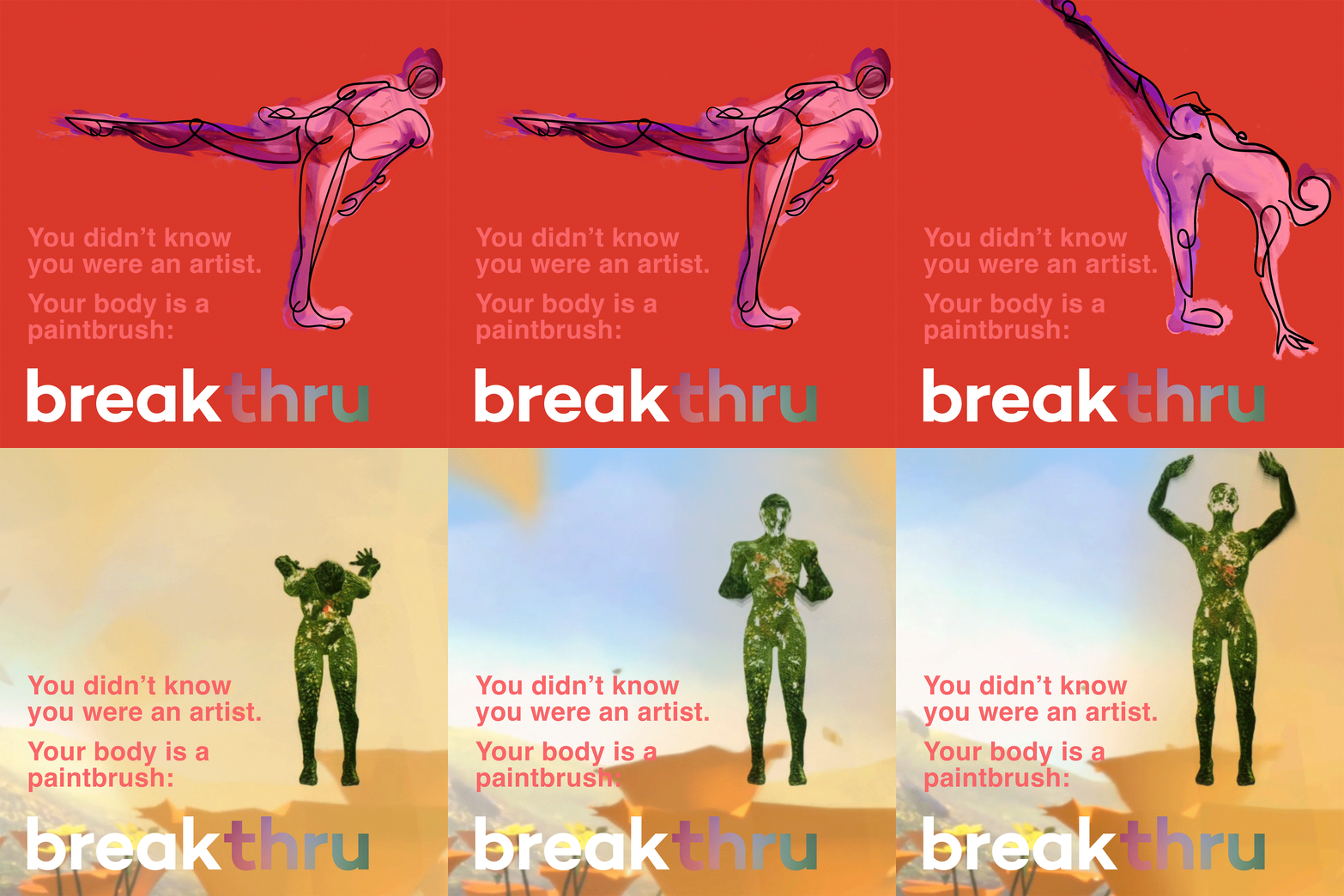
Breakthru keeps dance a mere hop, skip, and jump away from your workday. Regardless of if you're a 'first on the dance floor' type or if you prefer to lose yourself in the crowd, our dance-inspired microbreaks are designed for people of all abilities and comfort levels.
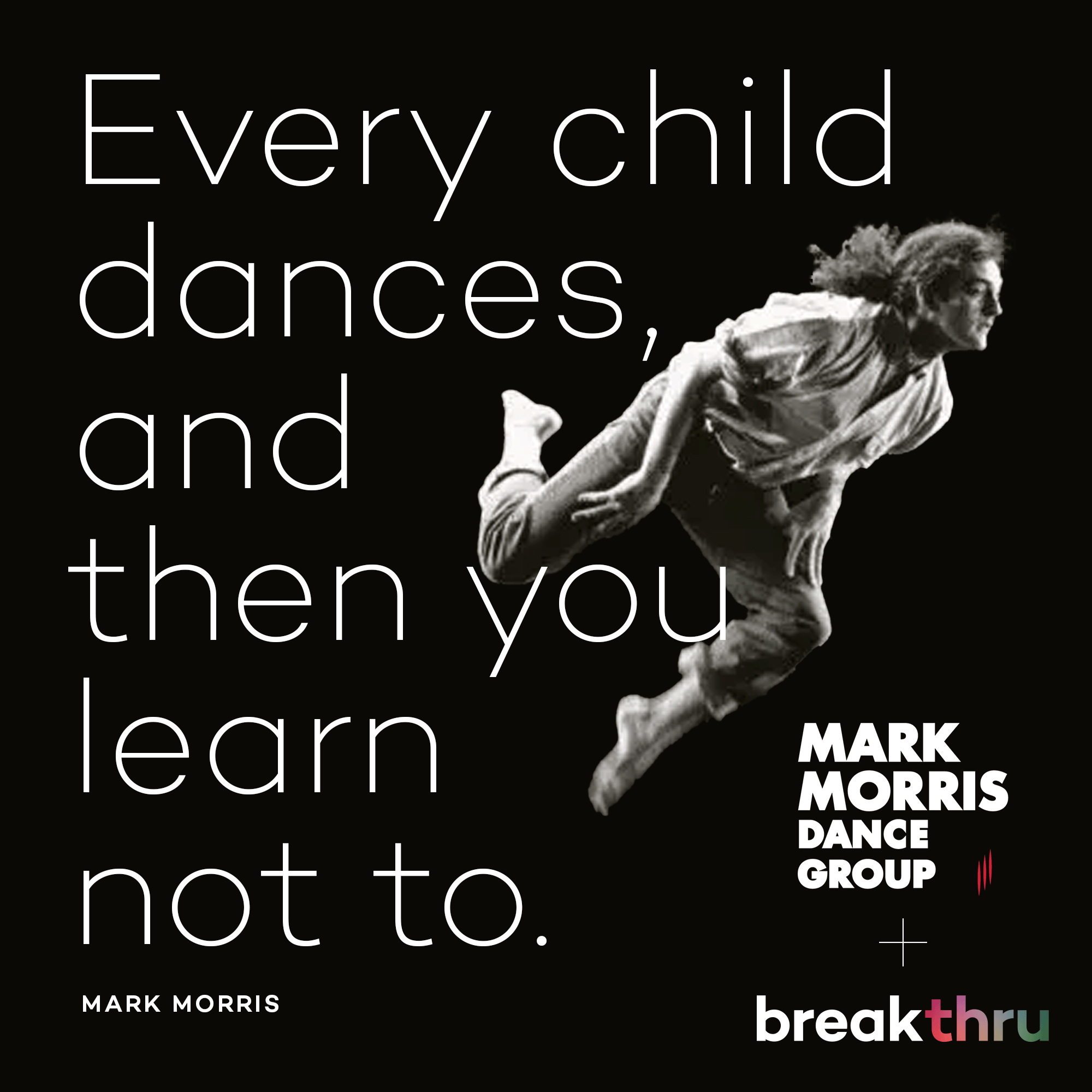
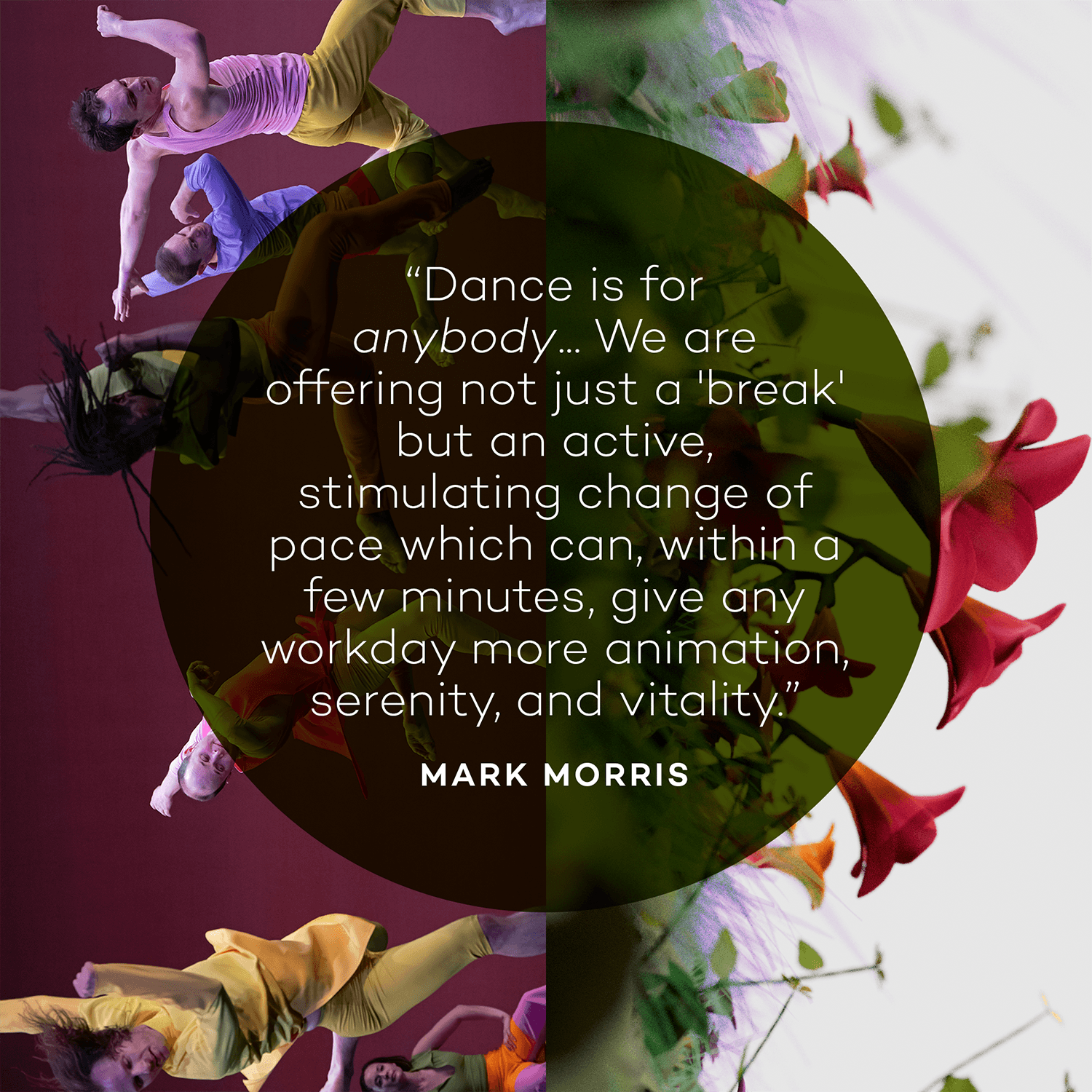
We're proud to partner with Mark Morris Dance Group to bring the joy of movement to the workday, and to make dance more accessible for everyone. With 2-minute movement breaks designed alongside Mark Morris' brilliant choreography, you can waltz your way through your day.
So, take 2 minutes, dance at your desk, invite a friend?
- Brown S, Parsons LM. The neuroscience of dance. Sci Am. 2008;299(1):78-83.
- Hackney, M.E., Burzynska, A.Z. and Ting, L.H. The cognitive neuroscience and neurocognitive rehabilitation of dance. BMC Neurosci 25, 58 (2024). https://doi.org/10.1186/s12868-024-00906-8.
- Teixeira-Machado, L., Arida, R. M., and de Jesus Mari, J. (2019). Dance for neuroplasticity: A descriptive systematic review. Neuroscience and Biobehavioral Reviews, 96, 232-240. https://doi.org/10.1016/j.neubiorev.2018.12.010.
- Sutton, J. (2023, September 7). Mirror Neurons and the Neuroscience of Empathy. PositivePsychology.Com. https://positivepsychology.com/mirror-neurons/.
- Karpati, Falisha J., et al. "Dance and the Brain: A Review." Annals of the New York Academy of Sciences, vol. 1337, no. 1, Mar. 2015, pp. 140-146, https://doi.org/10.1111/nyas.12632.
- SFC of Dance. "Dance and Cognitive Science - Definition and Detailed Explanation - Dance Theory Glossary - SFCOfDance." Sfconservatoryofdance.Org, 27 Apr. 2026, https://sfconservatoryofdance.org/dance-theory-glossary/dance-and-cognitive-science/. Accessed 16 July 2026.
- Prates, R.A.C.S., Kaczmarska, M., Senger, D. et al. Effects of dance interventions on brain health for older adults with cognitive impairment: an umbrella review. BMC Geriatr 25, 846 (2025). https://doi.org/10.1186/s12877-025-06483-7.
- Marzola P, Melzer T, Pavesi E, Gil-Mohapel J, Brocardo PS. Exploring the Role of Neuroplasticity in Development, Aging, and Neurodegeneration. Brain Sci. 2023 Nov 21;13(12):1610. doi: 10.3390/brainsci13121610. PMID: 38137058; PMCID: PMC10741468.
- The European Federation of Neurorehabilitation Societies. "Can We Change the Brain Through Dance?" EFNR, 14 Nov. 2023, https://efnr.org/change-the-brain-through-dance/. Accessed 16 July 2026.
- Colino, Stacey. "How Dance Promotes Brain Health." Brainandlife.Org, 30 Jan. 2025, https://www.brainandlife.org/articles/dance-promotes-brain-health. Accessed 16 July 2026.
- University of Central Florida. "The Vestibular Sense." General Psychology, https://pressbooks.online.ucf.edu/lumenpsychology/chapter/reading-the-vestibular-sense/. Accessed 16 July 2026.
- Hu F, Qiu X, Wu X, Wu X, Li H, Kim S. Effects of dance sports exercise on vestibular function and balance of children with sensorineural hearing loss; a randomized quasi-experimental trial. Front Pediatr. 2024 Aug 15;12:1426343. doi: 10.3389/fped.2024.1426343. PMID: 39210983; PMCID: PMC11358110.
- Murphy, Lisa. "Vestibular Sense and Vestibular Input Explained." NAPA Center, 15 May 2020, https://napacenter.org/vestibular-input/. Accessed 16 July 2026.
- Dahlerbruch, Katie. "Proprioception: What Is It?" NAPA Center, 5 Dec. 2022, https://napacenter.org/what-is-proprioception/. Accessed 16 July 2026.
- Meulenberg CJW, Rehfeld K, Jovanovic S and Marusic U (2023) Unleashing the potential of dance: a neuroplasticity-based approach bridging from older adults to Parkinson's disease patients. Front. Aging Neurosci. 15:1188855. doi: 10.3389/fnagi.2023.1188855.
- McDonald, Jo. "Proprioception Demystified: A Game-Changer for Adult Dancers." Dragonfly Dance, 19 June 2023, https://www.dragonflydance.com.au/post/proprioception. Accessed 16 July 2026.
- Kirsch LP, Snagg A, Heerey E, Cross ES. The impact of experience on affective responses during action observation. PLoS ONE. 2016;11(5):e0154681.
- Tarr B, Launay J, Dunbar RI. Silent disco: dancing in synchrony leads to elevated pain thresholds and social closeness. Evol Hum Behav. 2016;37(5):343-9.
- Quiroga Murcia C, Kreutz G, Clift S, Bongard S. Shall we dance? An exploration of the perceived benefits of dancing on well-being. Arts Health. 2010;2(2):149-63.
- Liu X, Soh KG and Lu Y (2025) Effect of dance on social physique anxiety and physical self-esteem among adults: a systematic review. Front. Psychol. 16:1547802. doi: 10.3389/fpsyg.2025.1547802.
- Wisung, Elina. "The Dancing Brain - the Cognitive Effects of Dance." The Lewis Foundation of Classical Ballet (TLFCB), 6 July 2023, https://thelewisfoundation.org/2023/07/the-dancing-brain-the-cognitive-effects-of-dance/. Accessed 16 July 2026.
- Hackney, Madeleine Eve, et al. "The Cognitive Neuroscience and Neurocognitive Rehabilitation of Dance." BMC Neuroscience, vol. 25, no. 1, 6 Nov. 2024, https://doi.org/10.1186/s12868-024-00906-8.
- Feuer, Shayna, et al. "Integrative Psychology." Integrative-Psych.Org, 2024, https://www.integrative-psych.org/resources/unlocking-creativity-through-dance-the-science-behind-the-movement. Accessed 16 July 2026.
- Wong, May. "Stanford Study Finds Walking Improves Creativity." Stanford University, 24 Apr. 2014, https://news.stanford.edu/stories/2014/04/walking-vs-sitting-042414. Accessed 16 July 2026.
- Magali Druscovich and Pam Belluck. "Tango Therapy: How the Dance of Passion Is Helping Parkinson's Patients." The New York Times, 24 Mar. 2026, https://www.nytimes.com/2026/03/24/health/tango-therapy-parkinsons.html. Accessed 16 July 2026.
- Rabinovich, Débora B., et al. "A High Dose Tango Intervention for People with Parkinson's Disease (PwPD)." Advances in Integrative Medicine, July 2021, https://doi.org/10.1016/j.aimed.2021.07.005.
- Parkinson's Foundation. "What Is Parkinson's?" Parkinson's Foundation, 2019, https://www.parkinson.org/understanding-parkinsons/what-is-parkinsons. Accessed 16 July 2026.
- Edwards, Scott. "Dancing and the Brain." Harvard University, Harvard Medical School, 2015, https://hms.harvard.edu/news-events/publications-archive/brain/dancing-brain. Accessed 16 July 2026.
- Goldman, Jason G., and Victoria Stern. "How Dancing Leads to Bonding." Scientific American, vol. 27, no. 3, 14 Apr. 2016, pp. 14-14, https://www.scientificamerican.com/article/why-dancing-leads-to-bonding/, https://doi.org/10.1038/scientificamericanmind0516-14a. Accessed 16 July 2026.
- Basso JC, Satyal MK, Rugh R. Dance on the Brain: Enhancing Intra- and Inter-Brain Synchrony. Front Hum Neurosci. 2021 Jan 7;14:584312. doi: 10.3389/fnhum.2020.584312. PMID: 33505255; PMCID: PMC7832346.
- Tarr B, Launay J, Dunbar RI. Silent disco: dancing in synchrony leads to elevated pain thresholds and social closeness. Evol Hum Behav. 2016;37(5):343-9.
- Strain, Daniel. "Two to Tango: Study Shows Dancers' Brains Sync up as They Move Together." CU Boulder Today, 4 May 2026, https://www.colorado.edu/today/2026/05/04/two-tango-study-shows-dancers-brains-sync-they-move-together. Accessed 17 July 2026.
Breakthru in the World
Request a demo to learn how teams stay sharper, healthier, and more connected with Breakthru
See how science-backed, 2-minute microbreaks can boost focus, motivation, and resilience for your organization.
Join the
45,000+
corporations, educational
communities, and non-profits
worldwide using Breakthru.