Aging with Balance
September 21-25 is Fall Prevention Week, dedicated to increasing awareness around falls and injury prevention, and healthy aging.
As we age, strength, flexibility, and stamina all gradually decline, as muscle tissues shrink, joints stiffen, and balance becomes wobblier—increasing our risk of falling. While these are all natural, inevitable parts of aging, they are significantly influenced by how much we move.1
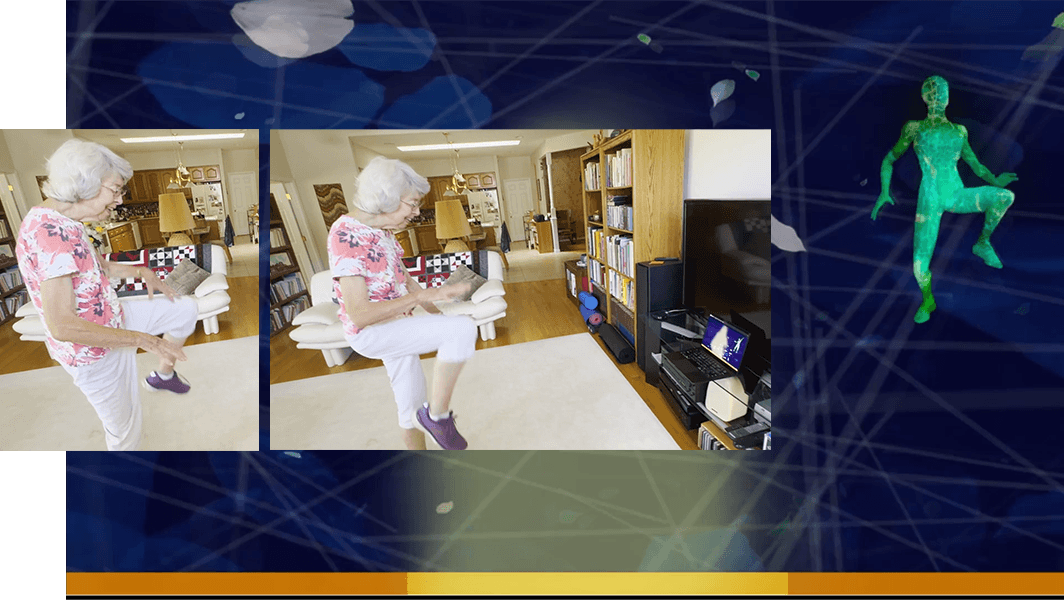
Adding even a little bit of movement to your day is a simple way to preserve and improve balance and prevent falls—which in turn supports cognitive function, improves confidence, and increases social connectedness.
Improving Balance with Movement
Balance declines and the risk of falls increases with age. One in four adults ages 65 and older suffer a fall each year,2 with falls being the leading cause of injury among adults in that age category.3
Steady balance requires the successful functioning and coordination of several parts of the body, including the central nervous system, inner ear, eyes, muscles, bones, and joints. Disruptions to the normal functioning of any one of these can throw off balance.4
Strength and flexibility support balance, keeping the body upright and under control. Regular movement enhances strength and flexibility, thereby improving balance and helping prevent falls. Movement practices rooted in balance and control, such as yoga, dance, tai chi, and targeted stretching exercises are particularly effective.5
Exercise enhances sensitivity of ligaments, joint capsules, and muscle receptors, thereby improving neuromuscular coordination and sensory input transmission. This enhanced integration of sensory information improves postural control and strengthens the overall function of the sensorimotor system in older adults.6
A six sense for balance
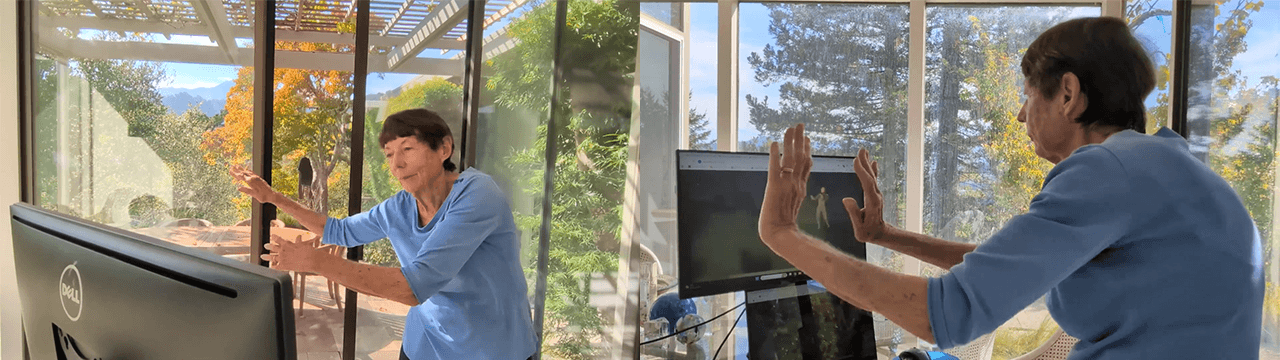
Proprioception is our sense of our body's position in space, which supports automaticity in everyday movements.7 Movement, especially those rooted in dance, strengthen proprioception, due to the significant spatial awareness and navigation, balance, stability, and coordination required, which helps us perform everyday activities more effectively and efficiently.8,9
Proprioception is supported by proprioceptors, which are sensory receptors in our muscles, joints, and tendons, and nerves that inform the brain of subtle changes in conditions that require adjustments. Proprioceptive inputs play a critical role in postural control, helping us stand steady.10
Proprioception is such a subtle sense that it is often taken for granted. As we age, having strong proprioception helps us continue to perform daily activities, stay upright and steady, and reduces our risk of falls by helping us recover our balance and control when we wobble.10
Aging is associated with numerous changes in the neuromuscular system, including alterations to muscle spindles and their neural pathways, which leads to decreases in the sensitivity, acuity, and integration of the proprioceptive signal. Together, this reduces postural control, placing us at an increased risk of falling.10
A systematic review of interventions used to improve proprioception and motor performance found active movement and balance-based interventions to show large improvements in both proprioception and motor performance.11
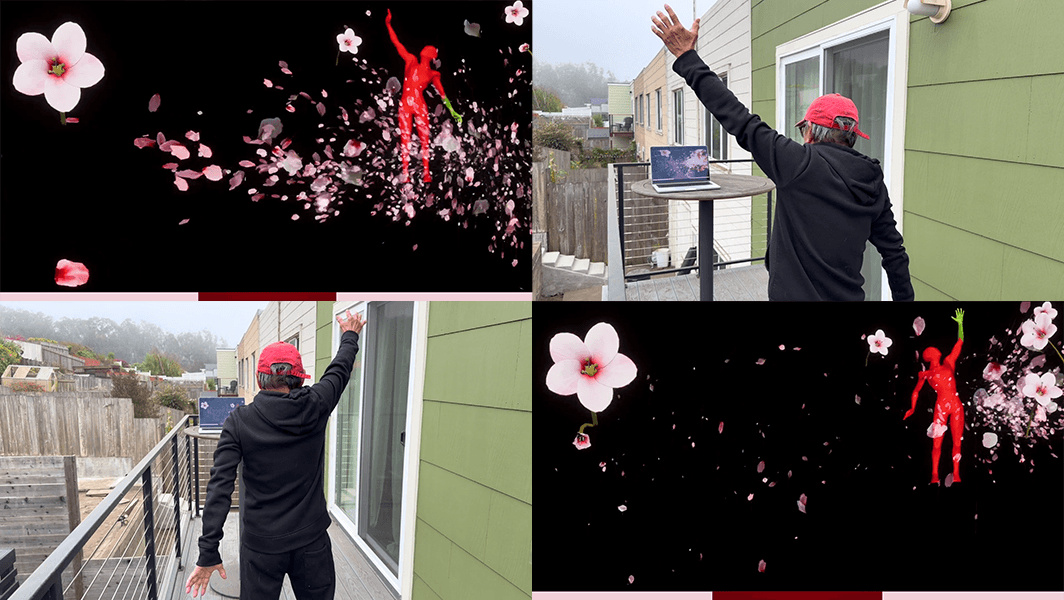
Breakthru can be used as a tool to strengthen proprioception. With movement-based breaks that integrate balance, stability, and coordination, Breakthru can help aging adults strengthen their proprioception, thus improving postural control and reducing the risk of falls.
Balance and Cognitive Function
Improving balance benefits the brain just as much as it benefits the body.
Balance skills have been associated with an increased volume of the hippocampus (the center of learning and memory), the basal ganglia (motor control), the frontal lobe (planning, problem-solving, personality, emotional control and language production), and the parietal lobe (sensory information, attention, and spatial awareness), and increased plasticity.12
More specifically, study of balance training across a 12-week period found improvements in memory and spatial cognitive abilities, structural changes in the frontal and parietal areas of the brain, and improved performance in learning-based tasks.13
Balance and Confidence
Improving balance builds confidence too.
When people believe they are at risk they often limit their movements and activities, leading to alterations in their physical activity, mental state, and social interactions that make falls more likely.14
Engaging in simple, balance-based exercises can help improve seniors' confidence and build their self-efficacy, reducing their fear of falling and thus reducing their risk of falls.14 Breathing in sync with movement and guided imagery shows further improvement in fear of falling.
Breakthru’s movement-based breaks are designed with experts in a variety of movement practices, offering a unique blend of yoga, tai-chi, dance, and stretching that all help improve balance and build confidence. By making simple, short moments of movement habitual, Breakthru increases confidence to move, subsequently reducing fear of falling.15
Balance Improves Social Connectedness
People aging with mobility disabilities are particularly vulnerable to social isolation and loneliness.16
Older adults who remain connected with others experience better balance, mobility, spatial awareness, and overall physical and mental health. Meanwhile, those who withdraw socially are at an increased risk of falling, due to reduced activity levels, weakened muscle strength, and feelings of isolation and depression.17
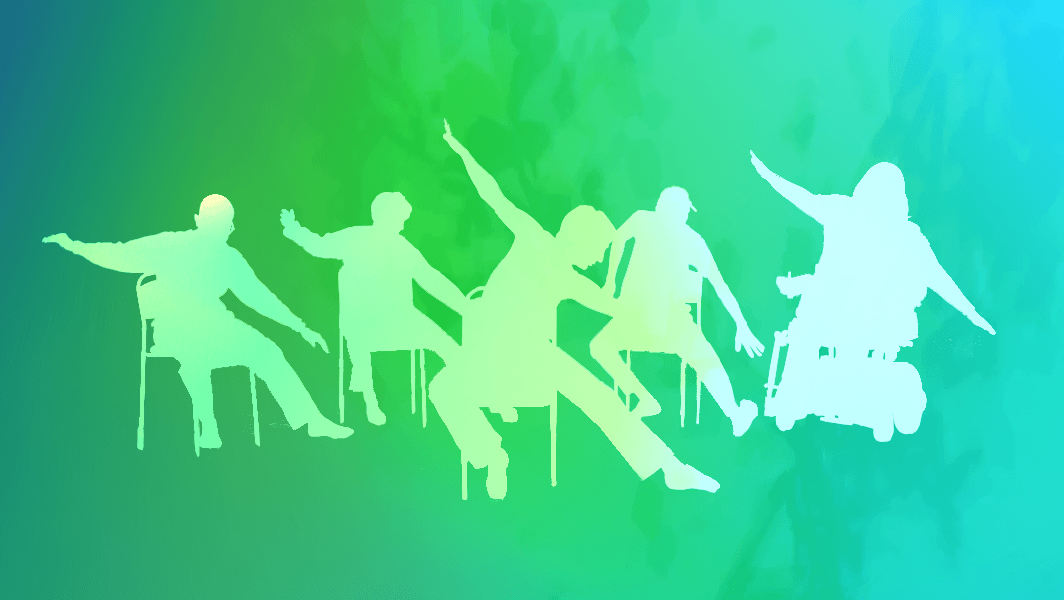
Breakthru’s movement-based breaks are designed to be done as a group, as a way to foster connection and community through movement. Bring Breakthru into your care facility as a way to get residents moving together: build it into your existing programming, pop it up on screens, place it in common areas.
Build your Balance with Breakthru
By improving strength, flexibility, mobility, proprioception, and postural control, Breakthru’s movement-based breaks help keep older adults balanced, steady, and in control, reducing their risk of falls. With improved balance, Breakthru further supports healthy aging by supporting cognitive function, increasing social connectedness, and improving confidence.
- LeWine, Howard. “Functional Fitness to Decrease the Effects of Age-Related Changes - Harvard Health.” Harvard Health, 9 Oct. 2024, https://www.health.harvard.edu/healthbeat/functional-fitness-to-decrease-the-effects-of-age-related-changes. Accessed 18 Sept. 2026.
- Centers for Disease Control and Prevention. “Older Adult Falls Data.” Older Adult Fall Prevention, 28 Oct. 2024, https://www.cdc.gov/falls/data-research/index.html. Accessed 18 Sept. 2026.
- UCLA Health. “Why Balance Is so Important (and How to Improve It).” Uclahealth.Org, UCLA Health, 19 Aug. 2025, https://www.uclahealth.org/news/article/why-balance-so-important-and-how-improve-it. Accessed 18 Sept. 2026.
- Marshall, Mallika. “Harvard Health.” Www.Health.Harvard.Edu, 7 Feb. 2022, https://www.health.harvard.edu/topics/balance. Accessed 18 Sept. 2026.
- Ask The Doctors. “Balance Begins to Decline as Early as Age 50.” Www.Uclahealth.Org, 23 May 2023, https://www.uclahealth.org/news/article/balance-begins-to-decline-as-early-as-age-50. Accessed 18 Sept. 2026.
- Sadaqa M, Németh Z, Makai A, Prémusz V, Hock M. Effectiveness of exercise interventions on fall prevention in ambulatory community-dwelling older adults: a systematic review with narrative synthesis. Front Public Health. 2023 Aug 3;11:1209319. doi: 10.3389/fpubh.2023.1209319. PMID: 37601180; PMCID: PMC10435089.
- Dahlerbruch, Katie. “Proprioception: What Is It?” NAPA Center, 5 Dec. 2022, https://napacenter.org/what-is-proprioception/. Accessed 16 July 2026.
- Meulenberg CJW, Rehfeld K, Jovanovic S and Marusic U (2023) Unleashing the potential of dance: a neuroplasticity-based approach bridging from older adults to Parkinson's disease patients. Front. Aging Neurosci. 15:1188855. doi: 10.3389/fnagi.2023.1188855.
- McDonald, Jo. “Proprioception Demystified: A Game-Changer for Adult Dancers.” Dragonfly Dance, 19 June 2023, https://www.dragonflydance.com.au/post/proprioception. Accessed 16 July 2026.
- Henry M, Baudry S. Age-related changes in leg proprioception: implications for postural control. J Neurophysiol 122: 525-538, 2019. doi: 10.1152/jn.00067.2019.
- Winter L, Huang Q, Sertic JVL, Konczak J. The Effectiveness of Proprioceptive Training for Improving Motor Performance and Motor Dysfunction: A Systematic Review. Front Rehabil Sci. 2022 Apr 8;3:830166. doi: 10.3389/fresc.2022.830166. PMID: 36188962; PMCID: PMC9397687.
- Olivia J. Surgent, Olga I. Dadalko, Kristen A. Pickett, Brittany G. Travers, Balance and the brain: A review of structural brain correlates of postural balance and balance training in humans, Gait & Posture, Volume 71, 2019, Pages 245-252, ISSN 0966-6362, https://doi.org/10.1016/j.gaitpost.2019.05.011.
- Rogge, Ann-Kathrin & Roeder, Brigitte & Zech, Astrid & Nagel, Volker & Hollander, Karsten & Braumann, K-M & Hötting, Kirsten. (2017). Balance training improves memory and spatial cognition in healthy adults. Scientific Reports. 7. 572. 10.1038/s41598-017-06071-9.
- National Institute on Aging. “Falls and Fractures in Older Adults: Causes and Prevention.” National Institute on Aging, 2022, https://www.nia.nih.gov/health/falls-and-falls-prevention/falls-and-fractures-older-adults-causes-and-prevention. Accessed 18 Sept. 2026.
- Dong R, Hamzah MSGB, Awang MMB, Qiu J and Chen S (2026) Effects of Tai Chi on balance and fall prevention in healthy older adults: a randomized controlled meta-analysis. Front. Public Health 13:1638006. doi: 10.3389/fpubh.2025.1638006.
- Remillard, E. T., Mitzner, T. L., & Mumma, K. T. (2025). Tele Tai Chi for people aging with mobility disabilities: Novel methodology and structured adaptation approach. Contemporary clinical trials communications, 47, 101543. https://doi.org/10.1016/j.conctc.2025.101543.
- Holloway, Jeremy. “Staying Social as a Way to Prevent Falls.” Ncoa.Org, 15 Apr. 2025, https://www.ncoa.org/article/how-staying-social-prevents-falls/. Accessed 18 Sept. 2026.
Breakthru in the World
Request a demo to learn how teams stay sharper, healthier, and more connected with Breakthru
See how science-backed, 2-minute microbreaks can boost focus, motivation, and resilience for your organization.
Join the
45,000+
corporations, educational
communities, and non-profits
worldwide using Breakthru.