Aging Actively
I grew up in Southern California during WWII with lots of neighborhood friends at a time where parents would often say “Why don’t you go outside to play?” and we were happy to concur because we knew friends would be out too. Exploration was encouraged with some distance limits (“Don’t go beyond X”), some time limits (“Listen for when I call you to come home for dinner”) and some Absolute Do Nots (“Never get into a car with a stranger,” “Do not climb over the [low] fence surrounding the La Brea Tar Pits.”)
It was freedom and it was fun, and I don’t think any of us were seeing it as “good for us.” Nearby undeveloped space was the setting for endless races, hide and seek, kite flying. Elementary school years flew by. I most certainly was not a real athlete, though I loved to swim and became good at it, and my relative height advantage put me in demand for strong serves and slams in volleyball.
High school had motion built in as did college, where we walked quite some distance to classes balancing armloads of books and notepads. PE was a requirement for two years, and my class choices were based entirely on late afternoon times offered, so as not to interfere with academics.
I met my husband while riding the waves at Laguna Beach. (We have slightly different narratives as to how this happened.) Fortunately he loved the outdoors even more than museums or jazz clubs and was open to new experiences. We married immediately after I finished college, walked together through numerous pairs of tennis shoes, seized any opportunity to travel somewhere or to go dancing. When Latin dances came on the scene we decided to up our game and take Samba lessons–and that was just the beginning.
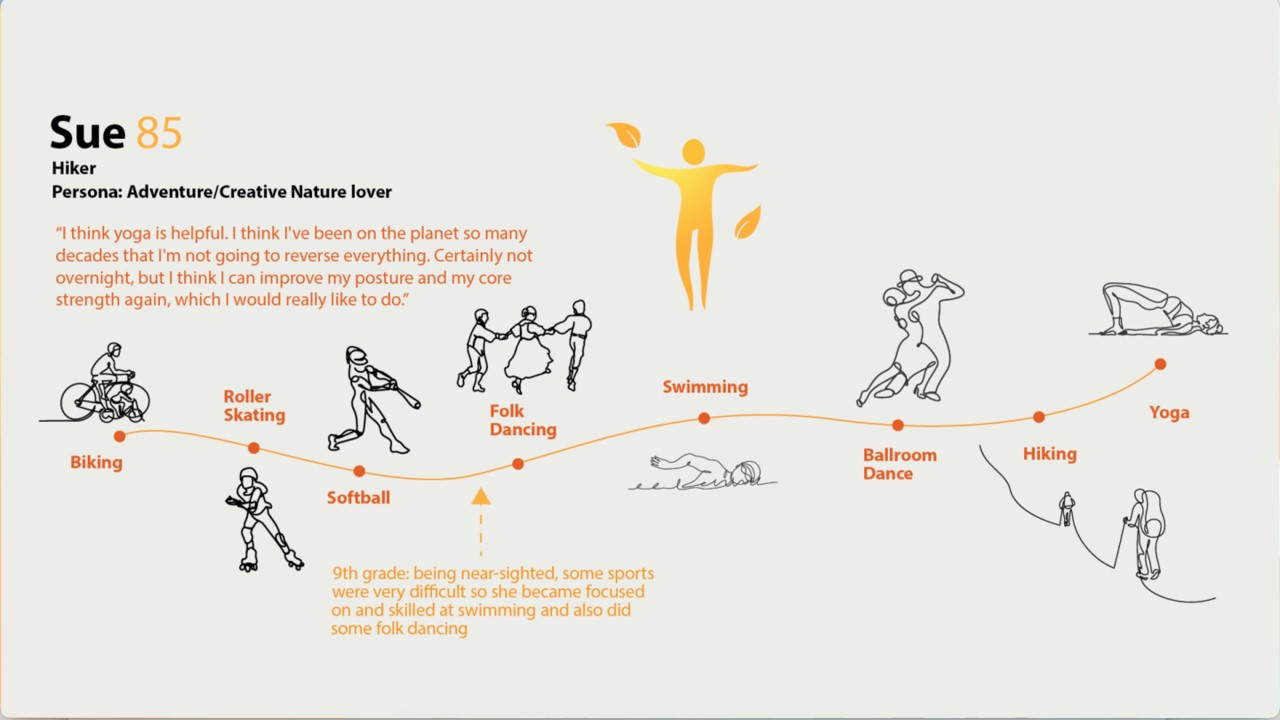
It wasn’t until we became parents that my point of view about movement began to change. I dropped out of the workforce for a while and in addition to family responsibilities I became an enthusiastic volunteer with several child-centered organizations. I loved all of it but realized that I needed some Me time to recalibrate. Local teenagers were hired to play with our two kids for an hour before dinner while I took a long, restorative walk to clear my head and restore my energy. Some of my best ideas came during those times.
When the children were a bit older I took on a challenging administrative position in an independent school. Not much sitting at a desk, no computers yet - hours of interaction with current parents, faculty/staff, alumni and their parents etc. I came to work early and stayed late in order to have time for strategic thinking: how to build relationships, organize and grow my department to best serve the school. My body and my brain signaled that movement would save me. I kept walking, joined a gym and became a serious hiker.
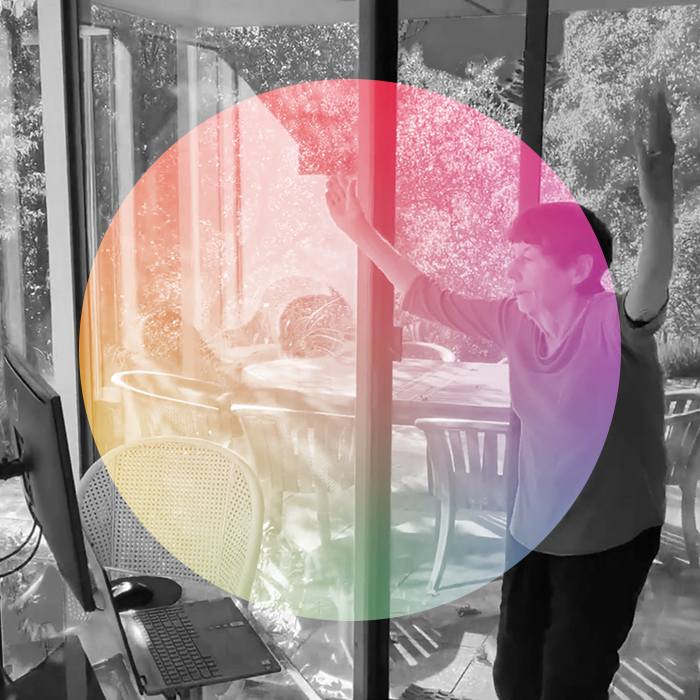
Forty years later, well into my 80s, I have retired from the job but not from my commitment to movement– intermittent stretches, jumping jacks, lightweight weights, housework, hiking and daily walking in my hilly neighborhood. It enables me to meet life’s snares with relative calm and to sleep well at night. When total strangers greet me with “Good Job!” I smile and say “Thank you! Gotta keep moving:)”
5 Reasons to Prioritize Adding Movement Microbreaks to Your Day for Healthy Aging:
- Movement improves your balance and helps prevent falls: Relevant studies have indicated that exercise interventions play a significant role in improving balance and preventing falls in older adults. Moreover, exercise has been proven to enhance the sensitivity of ligaments, joint capsules, and muscle receptors, thereby improving neuromuscular control and accelerating sensory input transmission. By enhancing the integration of sensory information, exercise interventions can effectively improve postural control in older adults while strengthening the overall function of the sensorimotor system.2
- Moving more can help prevent Alzheimer's and dementia: A lack of physical exercise is one of the main factors where the evidence is strong enough to show that it increases a person’s risk of developing dementia. Regular exercise can reduce the risk of developing dementia by about 28%. For Alzheimer's disease specifically, the risk was reduced by 45%.1
- Exercise slows muscle degradation: Numerous studies have shown that regular exercise can significantly slow down the decline in muscle function during the aging process. Such interventions can induce a series of beneficial muscular adaptations, including increased aerobic enzyme activity, enhanced muscle contractility, and significant improvements in muscle strength and activation.2
- Moving with others improves mood and reduces loneliness: Physical activity significantly impacts individual emotions (happiness and depression) and prosocial attitudes (social trustworthiness), increasing happiness and reducing depression.3
- Moving more can reduce muscle and joint pain: Adding just a few microbreaks to your day reduces the amount of musculoskeletal pain you feel (especially in the neck, wrists, shoulders, and upper back) as well as the number of places you feel it.4
5 Easy Ways to Incorporate Movement as You Age:
- Habit Stack: Habits are easier to follow when they are done in tandem. Choose a movement or stretch— such as squats or reaching for your toes— to do during daily habits like brushing your teeth.
- Include Movement in your Hobbies: Opt for an audiobook you can listen to on a walk, dance during a commercial break, walk while you’re on the phone, or stretch in between creative tasks.
- Moderate the Movement you Already Enjoy: Dance in your seat, take a water aerobics class, stationary bike, or try a low impact sport.
- Find a Community of Movers: Look for local exercise classes or groups to join— movement is always easier with a friend!
- Housework: Gardening, sweeping, grocery shopping, and climbing stairs all contribute to your daily movement.
- Alzheimer’s Society. (2025, August). Physical activity and the risk of dementia. Alzheimer’s Society. Retrieved from https://www.alzheimers.org.uk/about-dementia/managing-the-risk-of-dementia/reduce-your-risk-of-dementia/physical-activity
- Dong R, Hamzah MSGB, Awang MMB, Qiu J and Chen S (2026) Effects of Tai Chi on balance and fall prevention in healthy older adults: a randomized controlled meta-analysis. Front. Public Health 13:1638006. doi: 10.3389/fpubh.2025.1638006
- Shi, W., Zhu, X., Shi, J., Xu, L., & Jiang, W. (2023). Physical activity, individual emotions, and prosocial attitudes: The role of citizen identity. Social Behavior & Personality: An International Journal, 51(3), 1–14. https://doi.org/10.2224/sbp.12224
- Grünwald, J. A., & Licka, T. F. (2023). Health Promotion for Students of Veterinary Medicine: A Preliminary Study on Active Microbreaks and Ergonomics Education. Animals (2076-2615), 13(10), 1641. https://doi.org/10.3390/ani13101641
Breakthru in the World
Request a demo to learn how teams stay sharper, healthier, and more connected with Breakthru
See how science-backed, 2-minute microbreaks can boost focus, motivation, and resilience for your organization.
Join the
45,000+
corporations, educational
communities, and non-profits
worldwide using Breakthru.