Team collaboration: Keeping it simple
From thousands of conversations with org leaders and super users and in-depth looks into the science, Breakthru has come away with a philosophy for workplace wellness: simple is what wins. Simple to implement, simple to use, and simple to share and use with your team are key foundations of Breakthru. Strong team collaboration and simplicity are at the heart of this approach.
Back to basics: smart, simple, and timely solutions to wellness.
Connecting with your brain, body, and team with microbreaks.
What if wellness was not one more thing added to employee’s to-do lists, to be done alone after work in an attempt to recover from a stressful day? What if wellness took place IN the workplace and existing work tools, and could be shared and done with your team?
What if wellness was designed to strengthen team collaboration at the same time?
When we talk to break-takers and leaders and listen to researchers, we learn that wellness initiatives need to be an ingrained part of the workday org-wide, quick and easy to implement, and used together with teammates and leaders. Many feel as though wellness is an individual responsibility, but they wish it could be a larger part of their experience at work and with their team. This is where team collaboration can make wellness feel collective, not solitary. And, in a world of ever increasing complexity, employees are looking for something that can easily help them break away from the mental fatigue of working.
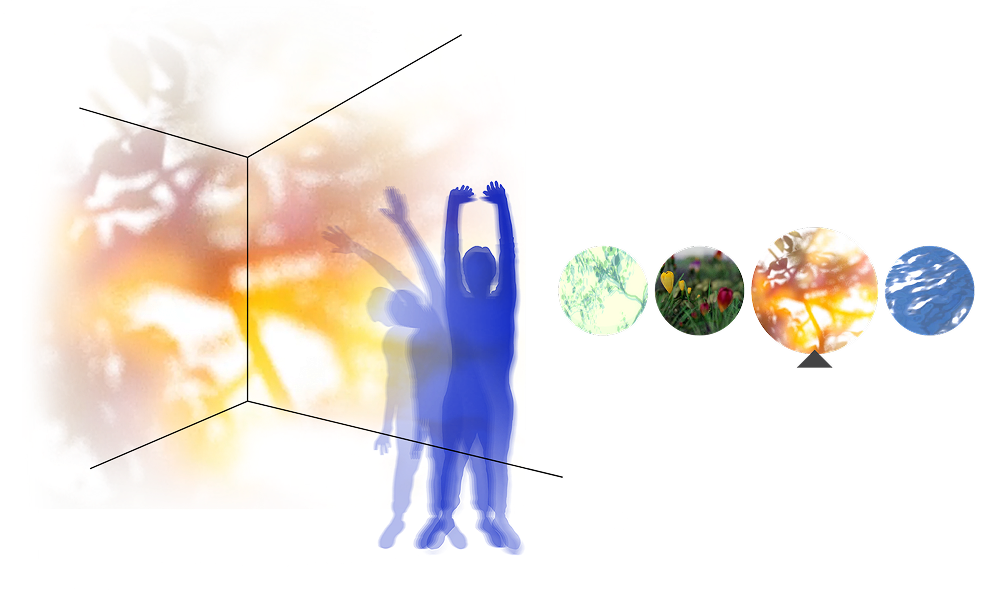
So, we kept things simple: microbreaks that are 2 minutes, exist within Microsoft Teams, pick from 4 moods, with a world of breaks behind them (and a surprise me button if you don’t want to choose), are easily shared with your team in a meeting or chat or a physical space in the office, and hones in on the most basic principles of wellness: connecting with your brain, body, and team through a break. Microbreaks are simple tools for sparking team collaboration and shared energy.
“It’s beautiful and it’s simple and it’s convenient.” May Ji, Principal PM Manager, Microsoft
Microbreaks need to be an integral part of the design of the workday.
Most health and wellness initiatives are too time consuming or confusing to be used in the office when employees need it most.
We hear it all the time from users: when they are looking to recover from the hundreds of different decisions and tasks packed into their busy workday, the last thing they want or need is to make yet another decision. When already feeling stressed, burnt out, and exhausted, wondering what wellness app or activity to do, what there is time for, and what is needed most to mentally recover can worsen decision fatigue and lead to pushing off the recovery experience altogether.
Working uses enough mental energy as it is, so why make employees use even more when they need to be mentally recovering? More is not always better, and in the world of wellness, most employees are looking for something quick and easy. “In a representative survey by Deloitte of 1,274 U.S. workers, 68% said they did not use the full value of the well-being resources their organizations offered because accessing programs was either too time-consuming, confusing, or cumbersome”.1
Most wellness tools also require a learning curve both within the app and to effectively use the skill, such as meditation. When already feeling the strain of working for 8+ hours, many will not be motivated to learn how to use yet another app (and take on the individual responsibility of wellness), especially if it is too time consuming to use in the workday. Leaving the current workplace tools and transitioning to a mobile app can also increase distractions, leading to a less productive break, or deterring employees from using the app altogether as it takes time to find and open the app and choose a recovery experience. Breakthru is right there when you need it, built into your digital workplace and work tools, so you’re not turning to a different part of your universe for an inefficient and unproductive break. This seamless integration promotes effortless team collaboration and shared wellness moments.
“I need something little and often to fit a busy schedule - Breakthru takes you on holiday for 2 minutes. It works!” Steve, Cancer Analyst, NHS
2 minutes is just right.
Microbreaks are quick, easy, and effective.
What we’ve found is that employees want a simple, quick, and effective intervention that they can use throughout the day to stop the accumulation of burnout. Bringing wellness into the workday helps employees wash away some of the stress incrementally so they can continue to work at their best and then leave the strain of the workday behind when they return home. This small shift also fosters team collaboration, as employees take breaks together.
Breakthru microbreaks are only 2 minutes (less than the time it would take to open a different app and choose a meditation or other experience), exist within Microsoft Teams so you don’t have to leave your work ecosystem, are done at your desk, and only have 5 options (and a surprise me button if you still aren’t up to choosing). When the breaks only take 2 minutes, a lot of the guilt and anxiety brought about by long, structured breaks are diminished.2
“If I've gotta work on a spreadsheet that all the numbers start jumbling up-...You know, those ones... Well, lemme just do a Breakthru first. Two minutes. Great. Right. Okay. I'm ready now.” Yvonne, NHS England
Breakthru also reaches employees during the workday when they need it most through reminders. Setting reminders on Breakthru can be the push many need to take a few moments to reset their mind and mood and actually benefit from workplace wellness. In the height of a busy workday, our brain forgets 50 to 70 percent of our intentions and goals and creating a reminder can help you remember to break up unhealthy prolonged periods of sitting.3 Even if there isn’t time in the moment, the reminder comes through as encouragement to make time for a break soon.When mental and physical recovery is done throughout the workday, you spend less time at home recovering from and thinking about work. Reminders also prompt micro-moments of team collaboration that reconnect people during hectic days.
Break-taking is best when you collaborate as a team.
Wellness plans are most effective when there are supporters at all levels.
What if wellness tools could help you connect with your team? And in turn, what if the tool could be shared with your team so you can build off of one another’s healthy habits? This is where team collaboration thrives, when wellness becomes social. Wellness initiatives work best when there are champions at all levels; teams need to be seeing support and encouragement and good examples from their colleagues, managers, and upper-level leaders. Just a bit of encouragement can go a long way, leading to an uptick in healthy habits; “the more employees perceive their colleagues to encourage them to behave in healthy ways, the higher the employee’s fruit and vegetable intake, and the more the employee was physically active.”4 Wellness champion networks, which consist of volunteer employees who support teams on a “grassroots” level… can be a source of peer support, which research suggests can build resilience, help prevent burnout, and aid in addressing the rising epidemic of loneliness at work.”1 At the leadership level, Breakthru can be an essential part of the leadership toolkit, to support the learning and implementation of necessary soft skills. Leaders can show compassion and understanding to their team members by gifting breaks to them when they need it most. This combination of leadership and team collaboration creates a culture of shared care.
“I'm encouraging our staff to use the app for better health, increased productivity, and general fun.” MARY, Office Manager, Nonprofit Store to Door
Talk the talk and walk the walk: give your team permission to take breaks and lead by example by taking them yourself.
Explicit support can help encourage people to take breaks because many employees "feel under pressure to get back to their desks from a break as soon as possible and some felt the need to make up excuses for taking what most would consider to be a normal break".2 Guilt and anxiety can have a large negative effect on employees taking breaks, which may lead to entire teams feeling uncomfortable with breaks.2 But, when employees feel supported by their leaders in their recovery efforts, they believe that their supervisor wants them to detach and recover from work, leading to a boost in the positive effects of microbreaks.5 Openly supporting team collaboration in wellness normalizes healthy work rhythms.
Breakthru aims to be a movement, movement. A celebration of moving throughout the day and exemplifying positive habits. Thus, Breakthru does not track or provide data to organization leaders to be combed through and analyzed, nor does it use team challenges to encourage movement through embarrassment or motivation to just not be in last place. While other apps may use team initiatives and features to create leaderboards of the most active people, alienating those that cannot or do not move as much, Breakthru does not show specific team member’s breaks and instead celebrates the entire team’s efforts. This inclusive approach promotes authentic team collaboration rather than competition.
“[Breakthru] feels customized and tailored. It feels like when I go here, you know me. There's no judgment.” Jessica
When teams take breaks together, the positive effects multiply.
Not only does team encouragement and permission to take breaks boost the positive effects, so does taking them with your team. Used as an icebreaker for new team members, in a Breakthru team challenge, in a meeting, together before a presentation, or when you’re feeling like you and a colleague just need to press pause on a project, microbreaks are the perfect way to connect with team members while benefiting your physical and mental health. These shared moments build trust, morale, and stronger team collaboration.
When you opt to take breaks with others, you can create a community of support within your workplace where you can build on one another’s healthy habits and foster deeper connections. When wellness is often seen as an individual responsibility, Breakthru acts as a tool to help wellness become a team effort, something to be shared and gifted in the app, and encouraged through word-of-mouth, and through leading by example. Taking breaks with others can increase trust, connection, collaboration, positive feelings of one another, and desire to see one another again, all leading to better and more productive team dynamics. At its core, this is what true team collaboration looks like, wellness and work flowing together.
“I work in an office with no windows and it can get pretty dull and draining day after day. Since starting Breakthru my energy and enthusiasm have soared. My colleague and I try to do one together every hour and getting to stand up, stretch and move has really changed the working day for me!” Luisa, Minter, Ashford and St. Peter’s Hospitals, NHS Foundation Trust
Top 10 benefits of taking movement microbreaks together as a team:
- Physical activity significantly impacts individual emotions (happiness and depression) and prosocial attitudes (social trustworthiness), increasing happiness and reducing depression.6
- Performing workplace exercise could enhance the resources of work engagement, such as social support at work. Social support is an important resource of work engagement not only at the individual level but also at the team level, indicating that conducting workplace exercise with co-workers may enhance team-level work engagement.7 This directly enhances team collaboration and shared motivation.
- Group-based physical exercise at work contributed to building social capital within teams at the workplace.8
- Performing micro-exercise with colleagues at the workplace improves psychological and social factors, including social climate, feelings of vitality and the ability to work together in teams.9
- Engaging in movement with others increases energy level and mood through fun non-work related active breaks.10
- Engaging in synchronous movement with others leads to higher ratings of tolerance, closeness, trust, and desire to see one another again while building stronger social ties.11 Synchronous movement is a proven way to strengthen team collaboration.
- Workplace physical exercise performed together with colleagues improves social climate and vitality among workers with chronic musculoskeletal pain.12
- Micro-exercise performed at the workplace can increase muscle strength, reduce musculoskeletal pain, and prevent deterioration of work ability.9
- Performing workplace exercise once or twice a week showed a positive association with vigor of work engagement.7
- A strong sense of community positively impacts vigor over time, suggesting that employees with emotional attachment and a sense of belonging to their organization experience greater physical and mental well-being.13 This sense of belonging is the essence of lasting team collaboration.
Keep it simple: bringing wellness and collaboration to work.
Employees need to recover their mental energy from the hundreds of decisions and tasks that burden their life at work every day. Wellness should not feel like yet another decision to make or task on their plate; it should feel like a team initiative, supported by their colleagues, supervisors, mentors, and leaders, and something that occurs in the flow of their work day (not in addition to it). Making wellness part of daily team collaboration ensures it feels natural and supported.
When employees already feel like wellness is an individual responsibility, they need a tool that doesn't require a string of decisions, isn't going to require a lot of time and planning, and is simple to use for all levels of technical knowledge. Movement microbreaks meet you where you are: at your desk, in the tools you already use, and blend seamlessly into even the busiest schedule.
By making break-taking a team activity, you grant permission to take breaks. You can ease the associated feelings of guilt, create stronger social bonds among team members, and build resilience across your team to help your employees prepare to meet the challenges of the work day. When done consistently, these shared moments become the foundation of effective team collaboration.
Employees need a time-effective simple intervention for their wellness. Breakthru meets them where they are to provide the boost they need, at the click of a button, in just two minutes. Because in the end, simplicity and team collaboration go hand in hand.
- Croft, J., Parks, A., & Whillans, A. (2024, October 18). Why workplace well-being programs don’t achieve better outcomes. Harvard Business Review. https://hbr.org/2024/10/why-workplace-well-being-programs-dont-achieve-better-outcomes
- Oliver, M., Rodham, K., Taylor, J., & McIver, C. (2021). Understanding the psychological and social influences on office workers taking breaks; a thematic analysis. Psychology & Health, 36(3), 351–366. https://doi.org/10.1080/08870446.2020.1764954
- Sima, R. (2023, July 27). Trouble achieving goals? Why your brain needs reminders. Washington Post. https://www.washingtonpost.com/wellness/2023/07/27/reminders-goals-cognitiveoffloading-strategies/
- Van der Put, A., Ellwardt, L. Employees’ healthy eating and physical activity: the role of colleague encouragement and behaviour. BMC Public Health 22, 2004 (2022). https://doi.org/10.1186/s12889-022-14394-0
- Nie, Q., Zhang, J., Peng, J., & Chen, X. (2023). Daily micro-break activities and workplace well-being: A recovery perspective. Current Psychology, 42(12), 9972–9985. https://doi.org/10.1007/s12144-021-02300-7
- Shi, W., Zhu, X., Shi, J., Xu, L., & Jiang, W. (2023). Physical activity, individual emotions, and prosocial attitudes: The role of citizen identity. Social Behavior & Personality: An International Journal, 51(3), 1–14. https://doi.org/10.2224/sbp.12224
- Jindo, T., Kai, Y., Kitano, N., Tsunoda, K., Nagamatsu, T., & Arao, T. (2020). Relationship of workplace exercise with work engagement and psychological distress in employees: A cross-sectional study from the MYLS study. Preventive Medicine Reports, 17, 101030. https://doi.org/10.1016/j.pmedr.2019.101030
- Andersen LL, Poulsen OM, Sundstrup E, et al. Effect of physical exercise on workplace social capital: Cluster randomized controlled trial. Scandinavian Journal of Public Health. 2015;43(8):810-818. https://doi.org/10.1177/140349481559840
- Andersen, L.L., Skovlund, S.V., Vinstrup, J. et al. Potential of micro-exercise to prevent long-term sickness absence in the general working population: prospective cohort study with register follow-up. Sci Rep 12, 2280 (2022). https://doi.org/10.1038/s41598-022-06283-8
- Jakobsen, M.D., Sundstrup, E., Brandt, M. et al. Psychosocial benefits of workplace physical exercise: cluster randomized controlled trial. BMC Public Health 17, 798 (2017). https://doi.org/10.1186/s12889-017-4728-3
- Marta Zaraska, “Moving in Sync Creates Surprising Social Bonds among People,” Scientific American 323, 4, 64-69 (October 2020). https://www.scientificamerican.com/article/moving-in-sync-creates-surprising-social-bonds-among-people/
- Andersen, Lars L. PhD; Persson, Roger PhD; Jakobsen, Markus D. PhD; Sundstrup, Emil PhD. Psychosocial effects of workplace physical exercise among workers with chronic pain: Randomized controlled trial. Medicine 96(1):p e5709, January 2017. https://doi.org/10.1097/MD.0000000000005709
- Scotto di Luzio, S., Isoard, G. S., Ginoux, C., & Sarrazin, P. (2019). Exploring the relationship between sense of community and vigor in workplace community: The role of needs satisfaction and physical activity. Journal of Community Psychology, 47(6), 1419–1432. https://doi.org/10.1002/jcop.22195
FAQs
Breakthru in the World
Request a demo to learn how teams stay sharper, healthier, and more connected with Breakthru
See how science-backed, 2-minute microbreaks can boost focus, motivation, and resilience for your organization.
Join the
45,000+
corporations, educational
communities, and non-profits
worldwide using Breakthru.