Body Awareness at Work: How Microbreaks Save Money and Improve Health
Sitting costs: the budget and health effects of sitting and how microbreaks reverse them.
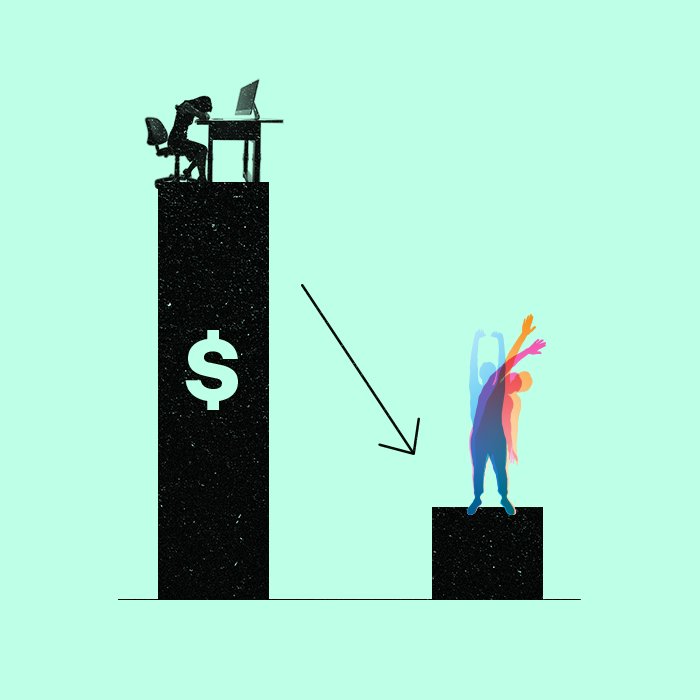
Organizations are constantly looking for ways to trim their budget, analyzing every extra dollar spent and where they can save, but many are overlooking the cost of the activity desk workers do the most every day: sit. “Sitting is the new smoking” holds multiple truths, it is costing employees’ health, and organizations’ bottom line. Musculoskeletal pain is among the top healthcare spends for organizations, which doesn’t even account for the amount lost due to productivity losses. Organizations could be spending less while getting more from their employees with one simple solution: microbreaks that restore movement and improve body awareness.
80% of people spend the majority of their day seated.
The majority of us are sitting for the majority of our days and many don’t even realize it. Over 80% of all U.S. jobs are sedentary with workers staying seated, and turning off their minds and bodies, for 78% of their working day.1,2 Overall beyond just working hours, research shows that people sit an average of 12.3 hours of a 16-hour day.3 This level of sedentary behavior negatively impacts employees' overall health, productivity, and musculoskeletal system.
Developing body awareness can help employees recognize how much time they spend sitting, notice discomfort sooner, and take action to move before pain escalates. Research shows that employees are looking for this to change with an expressed desire to shift their time spent sitting (73% of the day on average) to only 54% of the day spent sitting, 16% spent standing and 23% walking.4
These small shifts in body awareness and daily behavior could positively impact team members as well as the organization's bottom line.
Musculoskeletal pain: what is it, what causes it, and how many are suffering?
The crick in your neck, aching back, and tired wrists you feel throughout the workday actually have a name: musculoskeletal pain. Musculoskeletal conditions affect the bones, muscles, joints and certain connective tissues and are the top contributors to employer health care costs.5
This pain is incredibly common, with over half of U.S. adults suffering from musculoskeletal conditions, which doesn’t account for those who suffer from more infrequent pain.6
Low back pain is the leading cause of disability and productivity loss worldwide and knee pain affects nearly 1 in 2 people, accounting for 5% of all primary care visits, both posing a significant economic burden on businesses.7 Sitting at a desk all day only exacerbates these conditions, with some of the most common musculoskeletal issues (carpal tunnel syndrome and arthritis) being compounded by daily, repetitive actions like typing and sitting for prolonged periods of time.5 Increasing body awareness in employees can help prevent these repetitive stress injuries and reduce health costs.
How much musculoskeletal pain is costing your organization.
Employers spend $353 billion annually on treatments aimed at helping their employees with musculoskeletal conditions and 75% of employers rank musculoskeletal conditions among the top 2 health conditions (and rising) driving their costs.8,9,10 With musculoskeletal conditions impacting 1 in 2 Americans, it is the top contributor to employer health care costs.5
Developing body awareness through microbreaks and movement education can help employees identify early warning signs of strain, fatigue, or pain, before they turn into costly injuries.
An analysis of UnitedHealthcare data on the three costliest chronic conditions found that:5
- MSK is the costliest condition for employers at $52 per member per month.
- Women account for 54% of musculoskeletal spend.
- 75% of those affected by musculoskeletal conditions are Gen X and Baby Boomers, who make up the majority of today’s workforce.
The $353 billion organizations spend annually on musculoskeletal pain treatments accounts for nearly 15% of their total medical costs.8 Each employee with arthritis adds $8,919 in annual health care costs, and those with rheumatoid arthritis add about $7,500.11,12 The medical and pharmacy costs for those with low back pain are around $2,400 higher compared to other employees.13
Those who cultivate better posture, movement habits, and body awareness can dramatically reduce these costs, saving both money and pain.
Musculoskeletal pain costs more than just healthcare dollars.
Musculoskeletal conditions are incredibly costly to organizations due to healthcare expenses, but they also negatively impact budgets through days and productivity lost.
High prevalence of musculoskeletal disorders due to sedentary behaviors in workers has resulted in significant loss of working days.16 Musculoskeletal pain is the primary cause of sickness absence, lost productivity, and early retirement across Europe and the United States.17
When workers practice body awareness, they’re more likely to notice fatigue, adjust posture, and move periodically, reducing time off and improving focus.
In the United States alone, musculoskeletal conditions resulted in as high as 74% of total work days lost in 2012 and workers with at least one musculoskeletal condition missed an average of 14 workdays per year.18,19 Over 20% of workers who report low back pain miss more than a month of work, and 10% miss more than three months annually; employees experiencing knee pain can miss 19 days of work per year.7,20 In addition to the exorbitant cost of treating these conditions, organizations are paying for their employees to miss work (and not in a productive or refreshing way, such as a vacation).
Annually, productivity losses related to absenteeism cost U.S. employers nearly $225 billion.21
By fostering body awareness and encouraging microbreaks, employers can significantly reduce this loss.
Sedentary behavior is losing organizations money even while employees are at work! In addition to the cost of managing the condition, the pain that comes with musculoskeletal disorders may lead to decreased productivity at work, equating to an average of $3,105 in lost productivity annually per affected employee.5
The human cost of sitting.
Prolonged periods of sitting are costing your employees, too. Over 80% of all US jobs are predominantly sedentary, placing full-time office workers at increased risk for cardiovascular and metabolic morbidity and mortality.4 As your time sitting increases, so does your chance of early death, an 18% increase for men and a 37% increase for women.3,22
Prolonged sitting is also correlated with diabetes, obesity, high blood sugar, unhealthy cholesterol levels, excess body fat around the waist, musculoskeletal disorders, and other chronic diseases.23,26
Tasks performed by desk-based workers are characterized by physical stress due to prolonged time in a seated position and repetitive movements. Mental stress aggravates, and in some cases can cause, musculoskeletal discomfort.27 Building body awareness can help employees recognize when these physical and mental stresses arise, prompting them to move before damage occurs.
Introducing microbreaks can reduce the amount of time spent seated, allowing employees to stretch their muscles, reduce musculoskeletal pain, and improve productivity, energy, and mood, while increasing body awareness across the workforce.
How can businesses reduce musculoskeletal-based healthcare costs and productivity losses?
Microbreaks take just two minutes of mild movement, and when done throughout the day can decrease systolic blood pressure, reduce musculoskeletal pain, improve cardiometabolic health and sleep, and reduce the number of painful body regions and pain in the neck, wrists, shoulders, and upper back.28,30
When taking movement microbreaks, the level of discomfort and number of body segments with discomfort decreased, and the percentage of painful segments was reduced in desk-based workers.27 Microbreaks improve posture, circulation, and body awareness, helping employees better understand their physical limits and needs.
Movement microbreaks can help prevent musculoskeletal pain, reduce the amount of pain, and can even help reduce the number of surgeries. Over 36% of musculoskeletal surgeries are unnecessary, and employers stand to save at least $90 billion per year if employees choose pain-relief methods like physical therapy over surgery.31
Improving overall health and musculoskeletal conditions and preventing negative health outcomes before they occur, through movement and body awareness could save organizations tens to hundreds of thousands, or even millions, in healthcare costs annually.
Organizations that encourage microbreaks will find that employees are more productive (nearly 15%) and happier, reducing the cost of lost productivity due to the negative impacts of sedentary work.32,33
Desk-based workers spend approximately 78% of their time at work sitting but those who sat for less than 75% of their work day reported higher productivity.34 Allowing frequent microbreaks combined with stretching exercises increases performance nearly 15%.32
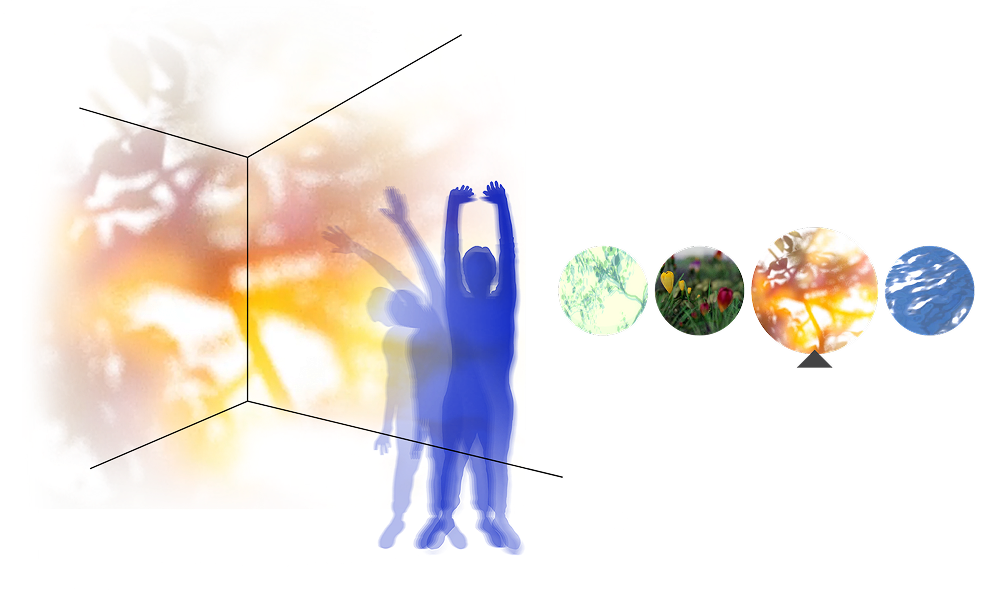
When the microbreaks contain images of nature, the post-break performance boost is even higher.35
Aside from healthcare costs, businesses can save money through boosting productivity that is frequently lost due to musculoskeletal pain and brain fog from prolonged sitting, both of which are mitigated when employees cultivate body awareness.
“Building movement into your workday is essential,” Khalili-Borna says when discussing the musculoskeletal hazards of office work.36 Dr. Dennis Farid Khalili-Borna, who specializes in family and sports medicine at Kaiser Permanente
Spending just a few minutes a day can save millions of dollars a year and save your employees millions of hours of pain.
The costs of sedentary behavior among desk workers are huge, and their exact cost is still largely unknown, with current estimates likely conservative. Beyond the obvious healthcare costs, musculoskeletal pain caused by sedentary behaviour is further costing organizations thousands of dollars annually per affected employee through absenteeism and lost productivity, and costing employees in terms of their health.
One of the best interventions to counteract sedentary behavior, reduce sitting time, and prevent musculoskeletal pain for employees is simple and time-effective but stands to save organizations millions annually while saving employees millions of hours of discomfort: movement microbreaks that promote body awareness.
Breakthru’s two-minute movement and breathing-based microbreaks provide employees with a needed break from sitting and performing repetitive motions and are easily taken anytime, anywhere in the flow of the workday. They are science-backed to reduce musculoskeletal pain for desk workers, improve a variety of health outcomes, and strengthen long-term body awareness in every participant.
- Gremaud, A. L., Carr, L. J., Simmering, J. E., Evans, N. J., Cremer, J. F., Segre, A. M., Polgreen, L. A., & Polgreen, P. M. (2018). Gamifying accelerometer use increases physical activity levels of sedentary office workers. Journal of the American Heart Association, 7(13), e007735. https://doi.org/10.1161/JAHA.117.007735
- Huang, Y., Xu, S., Hua, J., Zhu, D., Liu, C., Hu, Y., & Chen, Z. (2020). Emotional responses and coping strategies in nurses and nursing students during COVID-19 outbreak: A comparative study. PLOS ONE, 15(8), e0237303. https://doi.org/10.1371/journal.pone.0237303
- Scutti, S. (2017, September 12). Yes, sitting too long can kill you, even if you exercise. CNN Health. Retrieved from https://edition.cnn.com/2017/09/11/health/sitting-increases-risk-of-death-study/index.html
- Young, D. R., Hivert, M. F., Alhassan, S., Camhi, S. M., Ferguson, J. F., Katzmarzyk, P. T., Lewis, C. E., Owen, N., Perry, C. K., Siddique, J., & Yong, C. M. (2016). Sedentary behavior and cardiovascular morbidity and mortality: A science advisory from the American Heart Association. Circulation, 134(13), e262-e279. https://doi.org/10.1161/CIR.0000000000000440
- UnitedHealthcare. (2024, March 22). Musculoskeletal conditions drive employer health care spend. Retrieved from https://www.uhc.com/agents-brokers/employer-sponsored-plans/news-strategies/musculoskeletal-conditions-drive-spend
- United States Bone and Joint Initiative. (n.d.). Fast facts: Musculoskeletal conditions. Retrieved from https://www.boneandjointburden.org
- Ohio State University. (n.d.). Indirect costs of back pain and MSDs. Retrieved from https://spine.osu.edu/indirect-costs-back-pain-and-msds
- Demyan, D. (2023, April 21). How do you use data to reduce musculoskeletal (MSK) costs on your health plan? Roundstone Insurance. Retrieved from https://www.roundstoneinsurance.com
- Castlight. (2022, April). 2022 Castlight Workforce Health Index. Retrieved from https://www.castlighthealth.com
- Business Group on Health. (2023, August 22). 2024 Large Employer Health Care Strategy Survey: Executive Summary. Retrieved from https://www.businessgrouphealth.org/en/resources/2024-large-employer-health-care-strategy-survey-executive-summary
- Ortaliza, J., Amin, K., Cox, C., Michaud, J., & Kates, J. (2021, November 12). COVID-19 mortality preventable by vaccines. Peterson-KFF Health System Tracker. Retrieved from https://www.healthsystemtracker.org/brief/covid19-and-other-leading-causes-of-death-in-the-us/
- Integrated Benefits Institute. (2018, February). Health and productivity impact of chronic conditions: Rheumatoid arthritis. Retrieved from https://www.ibiweb.org/resources/the-health-and-productivity-impact-of-chronic-conditions-report-rheumatoid-arthritis
- Integrated Benefits Institute. (2019, September). Health and productivity impact of chronic conditions: Back pain. Retrieved June 10, 2024, from https://www.ibiweb.org/resources/the-health-and-productivity-impact-of-chronic-conditions-report-back-pain
- Bedenbaugh, A. V., Bonafede, M., Marchlewicz, E. H., Lee, V., & Tambiah, J. (2021). Real-world health care resource utilization and costs among US patients with knee osteoarthritis compared with controls. ClinicoEconomics and Outcomes Research, 13, 421-435. https://doi.org/10.2147/CEOR.S302289
- Del Río, F., Zitko, P., Santis, R., Babul, M., & Santis, F. (2023). Loss of health state utilities attributable to obesity. Value in Health Regional Issues, 36, 92-97. https://doi.org/10.1016/j.vhri.2023.02.007
- Ahmed Radwan, Luke Barnes, Renee DeResh, Christian Englund & Sara Gribanoff | (2022) Effects of active microbreaks on the physical and mental wellbeing of office workers: A systematic review, Cogent Engineering, 9:1, 2026206, https://www.tandfonline.com/doi/full/10.1080/23311916.2022.2026206
- Jakobsen, M.D., Sundstrup, E., Brandt, M. et al. Psychosocial benefits of workplace physical exercise: cluster randomized controlled trial. BMC Public Health 17, 798 (2017). https://doi.org/10.1186/s12889-017-4728-3
- Luger, T., Maher, C. G., Rieger, M. A., Steinhilber, B., & Luger, T. (2019). Work‐break schedules for preventing musculoskeletal symptoms and disorders in healthy workers. Cochrane Library, 2019(7), CD012886. https://doi.org/10.1002/14651858.CD012886.pub2n
- U.S. Bureau of Labor Statistics. (2023, November 8). Employer-reported workplace injuries and illnesses – 2021-2022. Retrieved June 10, 2024, from https://www.bls.gov/news.release/archives/osh_11082023.pdf
- Injury Facts. (n.d.). Work injuries and illnesses by part of body. Retrieved June 11, 2024, from https://injuryfacts.nsc.org/work/industry-incidence-rates/work-injuries-and-illnesses-by-part-of-body/
- Stewart WF, Ricci JA, Chee E, Morganstein D. Lost productive work time costs from health conditions in the United States: results from the American productivity audit. J Occup Environ Med. https://pubmed.ncbi.nlm.nih.gov/14665809/
- Patel AV, Bernstein L, Deka A, Feigelson HS, Campbell PT, Gapstur SM, Colditz GA, Thun MJ. Leisure time spent sitting in relation to total mortality in a prospective cohort of US adults. American Journal of Epidemiology. 2010 Aug 15;172(4):419-29. doi: 10.1093/aje/kwq155. Epub 2010 Jul 22. https://www.ncbi.nlm.nih.gov/pmc/articles/PMC3590043/
- Park JH, Moon JH, Kim HJ, Kong MH, Oh YH. Sedentary Lifestyle: Overview of Updated Evidence of Potential Health Risks. Korean Journal of Family Medicine. 2020 Nov;41(6):365-373. doi: 10.4082/kjfm.20.0165. Epub 2020 https://www.ncbi.nlm.nih.gov/pmc/articles/PMC7700832/
- Los Angeles Times. (2015, January 19). Sitting, sedentary screen device work, and health: The role of exercise and fitness. https://www.latimes.com/science/sciencenow/la-sci-sn-sitting-health-20150119-story.html
- Hoe, V. C., Urquhart, D. M., Kelsall, H. L., Zamri, E. N., Sim, M. R., & Hoe, V. C. (2018). Ergonomic interventions for preventing work‐related musculoskeletal disorders of the upper limb and neck among office workers. Cochrane Library, 2018(10),CD008570. https://doi.org/10.1002/14651858.CD008570.pub3
- Hamilton MT, Hamilton DG, Zderic TW: The role of low energy expenditure and sitting on obesity, metabolic syndrome, type 2 diabetes, and cardiovascular dis-ease. Diabetes. https://pubmed.ncbi.nlm.nih.gov/17827399/
- Lacaze, D. H. de C., Sacco, I. de C. N., Rocha, L. E., Pereira, C. A. de B., & Casarotto, R. A. (2010). Stretching and joint mobilization exercises reduce call-center operators' musculoskeletal discomfort and fatigue. Clinics, 65(7), 649-656. https://doi.org/10.1590/S1807-59322010000700003
- Duran, A. T., Friel, C. P., Serafini, M. A., Ensari, I., Cheung, Y. K., & Diaz, K. M. (2023). Breaking up prolonged sitting to improve cardiometabolic risk: Dose–response analysis of a randomized crossover trial. Medicine & Science in Sports & Exercise, 55(5), 847-855. https://doi.org/10.1249/MSS.0000000000003109
- Arippa, F., Nguyen, A., Pau, M., & Harris-Adamson, C. (2023). Movement Behavior and Health Outcomes among Sedentary Adults: A Cross-Sectional Study. International Journal of Environmental Research & Public Health, 20(5), 4668. https://doi.org/10.3390/ijerph20054668
- Grünwald, J. A., & Licka, T. F. (2023). Health Promotion for Students of Veterinary Medicine: A Preliminary Study on Active Microbreaks and Ergonomics Education. Animals (2076-2615), 13(10), 1641. https://doi.org/10.3390/ani13101641
- Hafner, L. (2023, July 21). 36% of MSK surgeries are unnecessary, costing the workforce $90B. Employee Benefit News. Retrieved from https://www.benefitnews.com/news/36-of-msk-surgeries-are-unnecessary-costing-the-workforce-90b
- Hedge, A., & Evans, S. J. (2001). Ergonomic management software and work performance: An evaluative study. Cornell University Human Factors Lab Technical Report. Retrieved from https://ergo.human.cornell.edu/Pub/HFlabReports/EMReport201.pdf
- Headrick, L., Newman, D. A., Park, Y. A., & Liang, Y. (2023). Recovery Experiences for Work and Health Outcomes: A Meta-Analysis and Recovery-Engagement-Exhaustion Model. Journal of Business & Psychology, 38(4), 821–864. https://doi.org/10.1007/s10869-022-09821-3
- Rosenkranz, S. K., Mailey, E. L., Umansky, E., Rosenkranz, R. R., & Ablah, E. (2020). Workplace sedentary behavior and productivity: A cross-sectional study. International Journal of Environmental Research and Public Health, 17(18), 6535. https://doi.org/10.3390/ijerph17186535
- Conlin, A., Hu, X., & Barber, L. K. (2021). Comparing Relaxation Versus Mastery Microbreak Activity: A Within-Task Recovery Perspective. Psychological Reports, 124(1), 248–265. https://doi.org/10.1177/0033294119900347
- Kaiser Permanente. (2024, August 19). How musculoskeletal conditions impact workforce health. Retrieved from https://business.kaiserpermanente.org/healthy-employees/care-conditions/musculoskeletal-conditions
Breakthru in the World
Request a demo to learn how teams stay sharper, healthier, and more connected with Breakthru
See how science-backed, 2-minute microbreaks can boost focus, motivation, and resilience for your organization.
Join the
45,000+
corporations, educational
communities, and non-profits
worldwide using Breakthru.